What Are No-Prep Veneers and Are They Right for You?
At White Space Dental, we want to provide our clients with the best services possible to create a smile that is perfect for them. One of the ways we do this is through no-prep veneers.
No-prep veneers are ultra-thin porcelain shells designed to improve the appearance of teeth while preserving as much natural tooth structure as possible. Unlike traditional veneers, they may require little or no enamel removal before placement, making them an appealing option for patients who want to refresh their smile without committing to more extensive dental work.
Whether they are the right choice depends on your teeth, your bite, and what you are actually hoping to achieve. At White Space Dental, we want our clients to have all the right information possible before they commit to any enhancement or procedure with us. That’s why this article will walk you through everything you need to know about no-prep veneers.
What Are No-Prep Veneers?
No-prep veneers are very thin porcelain shells bonded to the front surface of the teeth to improve their overall appearance. Because they are crafted to be exceptionally fine, they can often be placed with minimal alteration to the natural enamel underneath, and in some cases, none at all.
This is what sets them apart from conventional porcelain veneers, which typically require a small layer of enamel to be removed from the tooth surface before placement. That preparation creates space for the veneer and helps ensure a natural-looking fit.
No-prep veneers aim to sidestep that process wherever possible, which is why patients who want cosmetic improvement without permanent changes to their teeth are often drawn to them. Some cases of no-prep veneers will still require minor surface adjustments to achieve a proper fit and a result that looks convincingly natural.
For a broader look at your veneer options with our team, our complete guide to veneers is a helpful starting point.
How Do No-Prep Veneers Compare With Traditional Veneers?
Both types of veneers are designed to improve the appearance of the smile. Neither is universally better than the other.
The most fundamental difference is how much existing tooth structure is altered. Traditional veneers typically require around 0.3 to 0.5 mm of enamel to be removed, which is why they are considered irreversible once placed. No-prep veneers, being significantly thinner at around 0.2 to 0.5 mm, can often be bonded directly to the existing tooth without that level of preparation.
In terms of what they can achieve aesthetically, traditional veneers have an advantage when more significant corrections are needed. The preparation process gives the dentist more control over the final shape and allows for a wider range of cosmetic changes. No-prep veneers excel at subtle improvements rather than dramatic transformations, and the results tend to be at their best when the underlying teeth are already reasonably well-aligned and healthy.
No-prep veneers typically last up to 15 years with proper care, while traditional veneers can last up to 20 years. In both cases, the actual lifespan depends on how well the patient looks after them and whether the clinical assessment identified them as a suitable candidate in the first place.
Who Is a Suitable Candidate for No-Prep Veneers?
No-prep veneers tend to work well for patients with relatively healthy, well-aligned teeth who want to address minor cosmetic concerns. Because the restorations are so thin, they are best suited to situations where only small corrections like fixing minor chips are needed and there is solid natural tooth structure for the veneer to bond to.
On the other hand, no-prep veneers are generally not appropriate for patients with significant crowding or misalignment, large existing fillings or restorations, active gum disease, or a bite that places heavy force on the front teeth. Patients who grind or clench heavily also need to have that managed before any veneer treatment is considered.
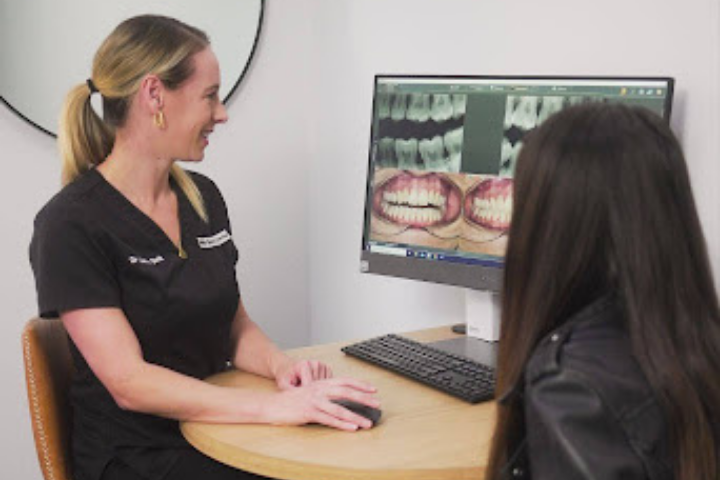
A comprehensive cosmetic consultation with one of our experts at White Space Dental can include a Digital Smile Design analysis. Digital Smile Design (DSD) is a revolutionary digital technology that allows you to test drive your new smile before commencing treatment.
What Are the Benefits of No-Prep Veneers?
The most significant benefit of this type of treatment is the preservation of natural tooth enamel. Enamel does not regenerate, so minimising its removal where clinically appropriate is a real benefit for long-term dental health.
Because there’s less preparation, the treatment process is generally less involved than traditional veneer placement. In some cases this also reduces the risk of post-treatment sensitivity, which can occasionally occur when enamel is removed. Patients also often appreciate that fewer visits are typically required, as there may be no need for temporary restorations while the final veneers are being fabricated in the laboratory.
At White-Space Dental, no-prep veneers can deliver natural-looking, aesthetically pleasing results for patients with minor cosmetic concerns.
What are Some Tips for Maintaining No-Prep Veneers?
We like our patients to be armed with the best advice when it comes to their teeth. With our no-prep veneers, care is often similar to what you should be doing day to day.
Brushing twice daily with a soft-bristled toothbrush and non-abrasive toothpaste, combined with daily flossing, will protect both the veneers and the gum tissue around them. This is where decay and gum issues tend to start if oral hygiene slips.
If we recommend a nightguard, it is worth taking that seriously. Grinding and clenching during sleep is one of the most common reasons veneers fail prematurely, and a custom-fitted guard offers meaningful protection.
Being mindful of what you bite into also helps. Ice, very hard or crunchy foods, and habits like nail biting all place forces on veneers that they are not designed to withstand regularly. Rinsing after coffee, tea, or red wine will not eliminate staining risk entirely but can reduce the gradual discolouration of bonding margins over time.
Above all, keep up with your regular dental check-ups. Routine examinations allow your dentist to monitor the condition of your veneers, catch any margin issues early, and address them before they become bigger problems.
What Are Alternatives to No-Prep Veneers?
No-prep veneers are one option within a broader range of cosmetic treatments, and for some patients, a different approach will produce a better result.
Traditional porcelain veneers are worth considering when more significant cosmetic changes are needed. The preparation involved is greater, but so is the flexibility in terms of what can be achieved.
Composite bonding is a tooth-coloured resin applied directly to the tooth to repair chips, close minor gaps, or improve shape and colour. It is typically more affordable and can often be completed in a single visit, though it may not offer the same durability as porcelain over the longer term.
Invisalign® or another form of orthodontic treatment is often the better starting point for patients whose primary concern is alignment rather than appearance alone. Straightening the teeth first also creates a much stronger foundation for any cosmetic work that follows.
Professional teeth whitening is frequently the most conservative option for patients whose main concern is discolouration. If staining is the issue, whitening alone can sometimes deliver the result a patient initially assumed they needed veneers to achieve. Our comparison of teeth whitening versus veneers explores this in more detail.
Are No-Prep Veneers Right for You?
This is a question that genuinely cannot be answered without an in-person examination. Many factors determine whether no-prep veneers are appropriate, such as your bite, your alignment, the condition of your enamel, your existing restorations, and your aesthetic goals. These can only be properly assessed by a dentist who can see your teeth and understand your situation in full.
At White Space Dental in Manly, we pride ourselves on a considered, patient-focused approach to smile design that starts with understanding your goals before making any recommendations. If you are exploring your options and would like an honest expert opinion on what is right for your smile, we welcome you to book a personalised cosmetic consultation at our Northern Beaches practice.